
The Inverted Pyramid: Put the Point First
An inverted-pyramid article puts the essential story in the opening paragraph, then adds explanation, evidence, background and detail underneath it. The title and first paragraph should be enough to understand the point and decide whether to continue. It is a simple way of being kinder to the reader’s time.
For anyone with an academic background, the first paragraph can be likened to the abstract of a paper. Together with the title, it should tell readers enough to decide whether they want to read further.
When telling a story, particularly in written form, it feels much more natural to start at the beginning. We establish the background and gradually work towards the conclusion. But that assumes the reader is interested enough to stay with us until we get to the point.
The inverted pyramid reverses that approach.
In journalism, the opening often concentrates on the five Ws and one H — who, what, when, where, why and how. Not every article needs to answer all six, but the principle is the same: put the important information first and add progressively more detail underneath it.
Why is it called an inverted pyramid?
The name describes the shape of the article. The broad top contains the most important information. As the article continues, the information becomes more detailed and less essential. Draw that structure and it resembles a pyramid balanced on its point.
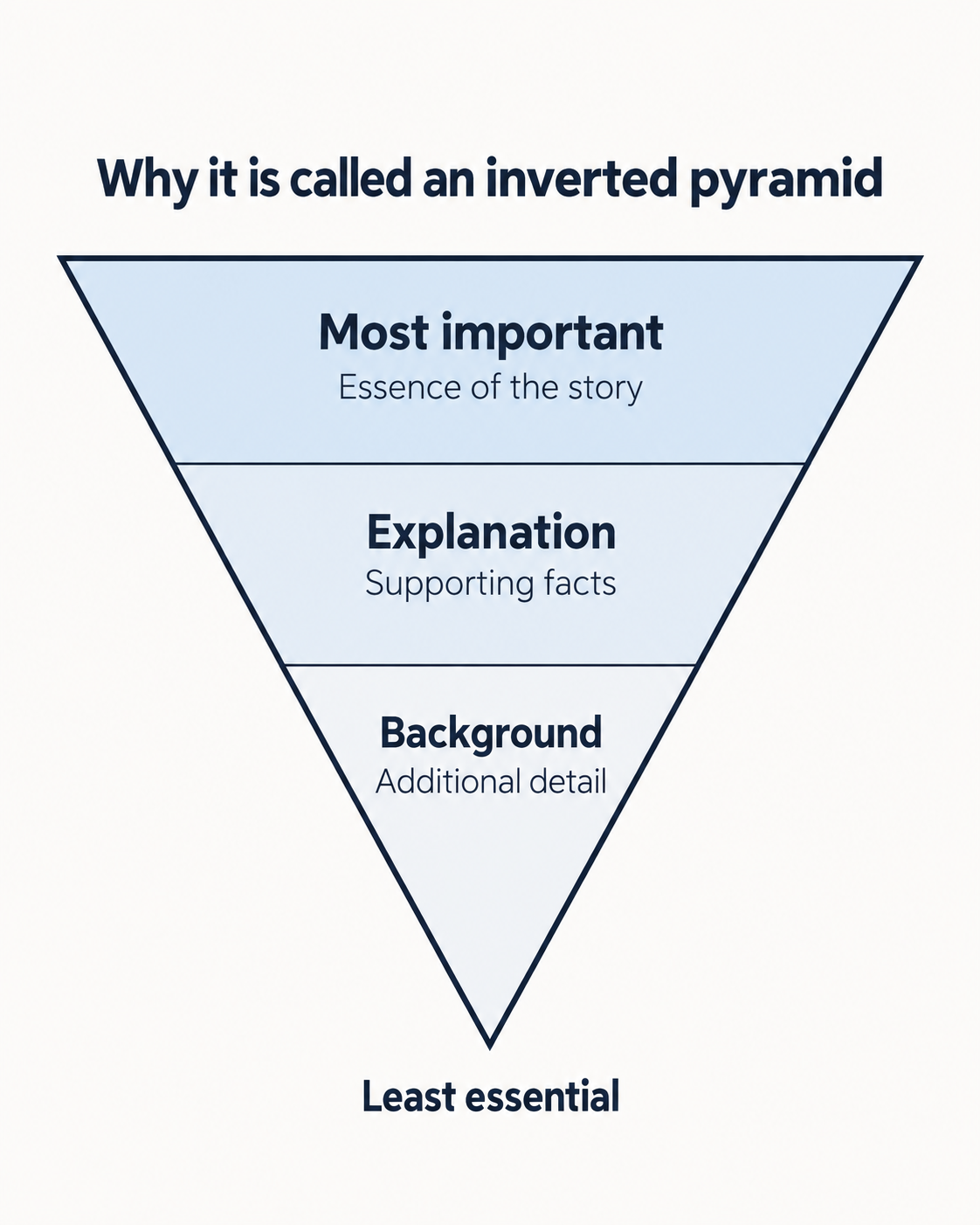
A reader who only needs the essence can stop early. A reader who wants the explanation, evidence and background can keep going.
Particularly useful for newsletters
The structure has a useful consequence for newsletters.
If the opening paragraph already captures the essence of an article, it can also serve as the article summary in the newsletter. The newsletter can show the title and opening paragraph, then link to the full article for anyone who wants to continue.
There is no need to write a separate summary purely for email.